

Novel Hair Loss Treatment Using a Single Topical Drop Shows Potential for Hair Growth Induction
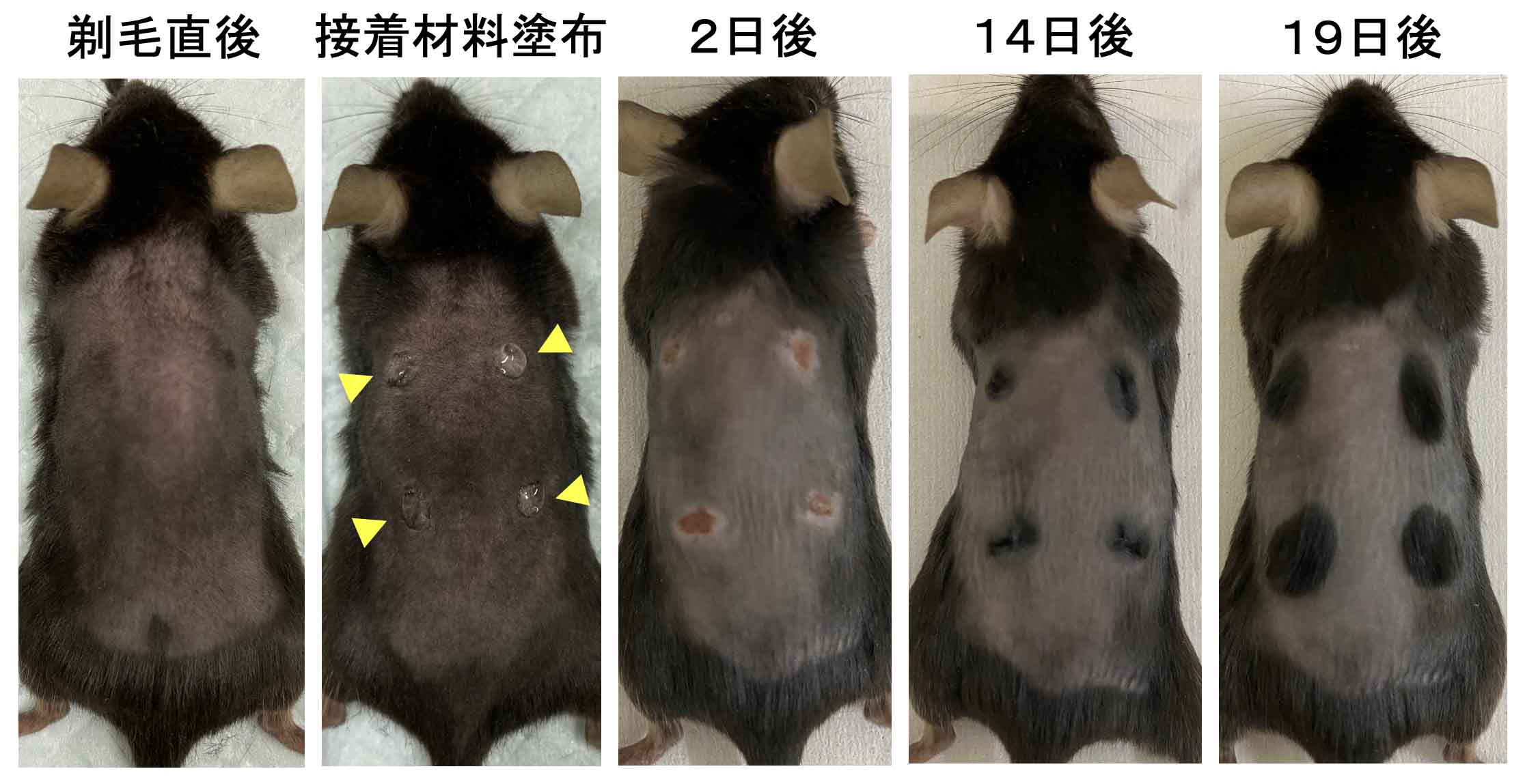
Core data from the published study

Kyushu Dental University
Professor Shouichiro Kokabu
A research group led by Professor Kokabu at Kyushu Dental University revealed hair growth induction in mice using adhesive materials such as pyroxylin
KITAKYUSYU, FUKUOKA, JAPAN, May 29, 2026 /EINPresswire.com/ -- Social interest in hair thinning and hair loss treatment remains extremely high, and research and development related to hair regeneration and hair growth promotion are advancing worldwide. However, the mechanisms regulating hair growth are highly complex, and fully satisfactory baldness treatment options for alopecia have yet to be established. Therefore, the development of methods capable of efficiently inducing hair growth and hair follicle regeneration is strongly desired.
Hair follicles undergo repeated lifelong cycles consisting of the growth phase (anagen), regression phase (catagen), and resting phase (telogen). In cases of hair thinning and hair loss, insufficient maintenance of the growth phase and prolonged resting phases are considered major issues. Accordingly, identifying methods to efficiently transition resting hair follicles into the growth phase is an important challenge in hair regeneration research. Although mice are widely used as model animals in life science research, their long resting hair cycle phase has made it difficult to accurately predict the timing of spontaneous hair growth.
Research Details and Findings
A research group led by Professor Shoichiro Kokabu of Kyushu Dental University discovered that applying adhesive materials such as pyroxylin to the shaved backs of mice induced clear hair growth corresponding to the treated areas.
This hair growth induction was observed regardless of sex and was also confirmed across multiple mouse strains, skin regions other than the back, and in middle-aged and elderly mice. Histological analysis revealed wound-like changes and accumulation of inflammatory cells mainly in the superficial skin region after pyroxylin treatment, followed by elongation of hair follicles and formation of follicular structures accompanied by sebaceous glands. In addition, increased expression of genes related to the hair cycle and hair follicle formation was observed in parallel with hair growth progression.
These findings suggest that adhesive materials such as pyroxylin locally stimulate the skin surface, and that associated inflammatory responses may trigger the transition of resting hair follicles into the growth phase.
Pyroxylin has previously been used in humans for wound covering and fixation purposes, and substantial safety-related information has already been accumulated.
Therefore, these findings may contribute to the future development of localized hair loss treatment methods. Furthermore, because this method allows evaluation of hair growth induction at more than 20 skin sites per mouse, it may improve the efficiency of hair regeneration research and reduce the number of animals required for experiments, including studies evaluating drug efficacy.
Future Prospects
The research group aims to clarify the cellular responses and molecular mechanisms underlying this hair growth induction. The method may also contribute to the discovery of hair growth-promoting substances and drug evaluation, with the long-term goal of developing new regenerative therapies targeting hair follicles.
Comment from Professor Kokabu
“Many people may find it unusual that a dental university is conducting research on hair. However, teeth and hair actually share highly similar developmental processes during the embryonic stage and are deeply related from a developmental biology perspective. In fact, there are many diseases that affect both teeth and hair.
This study originated from a phenomenon that was accidentally observed during another experiment, representing a case of scientific serendipity. As a result, the research initially lacked sufficient experimental tools, expertise, and established knowledge in the hair research field, making publication particularly challenging.
Throughout the process, the group received invaluable advice and support from numerous collaborators and expressed sincere gratitude to everyone involved.”
Paper Information
Title: “Pyroxylin shortens the resting stage of the hair cycle in mice”
Authors: Shoichiro Kokabu, Kunikazu Tsuji, Chou Ying-Ying, Ayako Washio, Tomohiko Shirakawa, Yusuke Ono, Quan Yuan, Osamu Kaminuma, Takuma Matsubara
Journal: Scientific Reports
DOI: 10.1038/s41598-026-52804-0
Contact Information
Professor Shoichiro Kokabu
Kyushu Dental University
E-mail: r14kokabu*fa.kyu-dent.ac.jp
Please replace * with @ before sending.
About Public University Corporation Kyushu Dental University
Kyushu Dental University is the only public dental university in Japan and serves as a comprehensive university of oral medicine consisting of the Faculty of Dentistry and the Faculty of Oral Health Sciences. The university defines dentistry as medical care that supports daily life and well-being through oral health.
Shoichiro Kokabu
Kyushu Dental University
932853047398
r14kokabu@fa.kyu-dent.ac.jp
Legal Disclaimer:
EIN Presswire provides this news content "as is" without warranty of any kind. We do not accept any responsibility or liability for the accuracy, content, images, videos, licenses, completeness, legality, or reliability of the information contained in this article. If you have any complaints or copyright issues related to this article, kindly contact the author above.
